God of War Laufey Mythology
A source-labeled guide to the gods, pantheons, and mythology references in God of War Laufey: what is confirmed, what is reported, and what still needs proof.
God of War Laufey Mythology: What Is Confirmed?
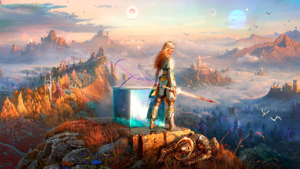
God of War Laufey mythology starts with Faye herself. In the Norse-era games, Faye is Laufey, a Jotunn warrior and mother of Atreus, whose hidden identity connects directly to Loki. The new game expands that foundation by placing her inside the Everywhen, an afterlife of the gods where multiple mythologies can meet.
The safest confirmed read is simple: Laufey/Faye and the Jotnar anchor the Norse side; Sekhmet introduces Egyptian war-goddess mythology; Begtse brings Tibetan Buddhist and Mongolian war-deity references; the Everywhen is Santa Monica Studio's original cross-pantheon frame. Anything beyond that needs careful labeling.
This page intentionally avoids treating fan theory as fact. Returning Greek gods, a complete pantheon list, specific background creature names, the full rules of death in the Everywhen, and the origin of Faye's new sword remain unconfirmed unless official footage or PlayStation copy states them directly.
Mythology Entity Database
| Entity | Tradition | Real mythology | Game role | Status |
|---|---|---|---|---|
| Laufey / Faye | Norse / Jotunn | In Norse tradition, Laufey is known mainly as Loki's mother, with limited surviving detail. | God of War reimagines Laufey as Faye: Kratos' wife, Atreus' mother, and the playable protagonist. | CONFIRMED |
| Jotunn / Jotnar | Norse | The Jotnar are giant beings tied to Norse cosmology, often opposed to the Aesir while also interwoven with them. | Faye is a Jotunn warrior, and her hidden plan for Atreus/Loki drives the modern God of War saga. | CONFIRMED |
| Sekhmet | Egyptian | Sekhmet is a lioness-associated goddess of war, destruction, power, and healing in Egyptian mythology. | Shown as an antagonist god connected to the Everywhen and Faye's capture. | CONFIRMED |
| Begtse | Tibetan Buddhist / Mongolian | Begtse is a wrathful war deity and protector figure associated with armor and martial force. | Shown as an aggressive Everywhen antagonist and one of the gods confronting Faye. | CONFIRMED |
| The Everywhen | Game-original multi-mythology afterlife | There is no exact single-myth equivalent; the concept borrows the broad idea of divine afterlife spaces. | Officially framed as the afterlife of the gods, allowing gods and magic from multiple traditions to converge. | CONFIRMED |
| Sphinx | Egyptian / broader ancient myth | A sphinx is commonly represented with a human head and lion body, often tied to royal or divine protection. | A sphinx-like mount or creature is reported in trailer breakdown research around Sekhmet scenes. | REPORTED |
| East Asian dragon-like creature | East Asian visual tradition | Serpentine dragons appear across Chinese, Japanese, Korean, Vietnamese, and other East Asian mythologies. | A small dragon-like being is reported in early Everywhen footage, but its exact species is not named. | NEEDS VERIFICATION |
| Kitsune-like background being | Japanese folklore | Kitsune are fox spirits often associated with shapeshifting, trickery, or Inari traditions. | Research notes a fox-spirit-like background figure in a prison-camp scene, but official naming is not confirmed. | NEEDS VERIFICATION |
| Mongolian soldiers | Mongolian / Central Asian visual influence | The connection is visual and cultural rather than a single named mythological deity. | Reported as soldiers or captors linked to Begtse's Everywhen faction. | REPORTED |
Mythology Evidence: Entity, Footage, Confidence
Use this evidence table when checking whether a mythology claim is based on official footage, written source material, or a background observation that still needs a screenshot.
| Entity | Evidence | Timestamp cue | Confidence |
|---|---|---|---|
| Laufey / Faye | PlayStation Blog + official reveal footage | Written source / story setup | CONFIRMED |
| Jotunn / Jotnar | God of War canon + PlayStation Blog | Character background | CONFIRMED |
| Sekhmet | Official footage + PlayStation Blog context | Antagonist reveal | CONFIRMED |
| Begtse | Official footage + mythology references | Antagonist reveal | CONFIRMED |
| The Everywhen | PlayStation Blog + official reveal footage | World setup | CONFIRMED |
| Sphinx | Footage observation | Sekhmet sequence | REPORTED |
| East Asian dragon-like creature | Footage observation | Early Everywhen traversal | NEEDS VERIFICATION |
| Kitsune-like background being | Press/community observation | Prison camp background | NEEDS VERIFICATION |
| Mongolian soldiers | Footage observation | Capture sequence | REPORTED |
Real Mythology vs. Game Adaptation
Laufey
Real mythology
Sparse Norse source figure, primarily Loki's mother.
Game adaptation
Expanded into Faye, a fully realized Jotunn warrior whose plan shapes Kratos and Atreus.
Caution
Do not assume real-myth details like Farbauti will appear unless confirmed.
Sekhmet
Real mythology
Egyptian goddess associated with war, power, plague, and healing.
Game adaptation
Adapted into an Everywhen antagonist with war-god authority.
Caution
Her relationship to Ra or healing/plague duality is not yet confirmed in-game.
Begtse
Real mythology
Tibetan/Mongolian war deity and wrathful protector figure.
Game adaptation
Adapted as a forceful antagonist god of war.
Caution
Ekajati or dharmapala story arcs remain speculative.
Everywhen
Real mythology
No direct real-world equivalent.
Game adaptation
Original cross-pantheon god-afterlife that lets the series mix mythologies.
Caution
A full list of pantheons or returning dead gods is not confirmed.
Source Trust Rules
Confirmed
Official PlayStation, Santa Monica Studio, or clearly visible official footage.
Reported
Repeated press or footage-observation claims that are plausible but not directly confirmed by official copy.
Needs verification
Background details, timestamp claims, species names, or fan theories requiring screenshots or official wording.
For deep dives on the two confirmed antagonist gods, see the Sekhmet guide and the Begtse guide. For scene-level checks, use the God of War Laufey trailer breakdown. For the story route through the Everywhen, use the story guide. For the realm rules specifically, use the Everywhen guide.
God of War Laufey Mythology FAQ
What mythology is in God of War Laufey? ▾
Confirmed foundations include Norse Jotunn lore through Faye/Laufey, Egyptian mythology through Sekhmet, Tibetan/Mongolian war-deity tradition through Begtse, and the game-original Everywhen as a cross-pantheon afterlife.
Is Sekhmet confirmed in God of War Laufey? ▾
Yes. Sekhmet is treated here as confirmed because the research points to official footage and PlayStation context. Her deeper Egyptian myth details should not be assumed to appear unless the game confirms them.
Is Begtse confirmed in God of War Laufey? ▾
Yes. Begtse is treated as a confirmed antagonist god, while details like specific Buddhist protector myths or Ekajati connections remain speculative until confirmed.
Is the Everywhen from real mythology? ▾
No. It is best treated as a game-original realm inspired by broad afterlife ideas, not as a direct copy of Norse Hel, Egyptian Duat, or Tibetan Bardo.
Does the Everywhen mean dead Greek gods will return? ▾
Not confirmed. It is a popular theory because the Everywhen is an afterlife of gods, but this page does not list returning Greek gods as confirmed.
Sources & References
- Official · PlayStation Blog — First Look at God of War Laufey
- Official · Official Reveal Footage
- Reference · Sekhmet reference
- Reference · Begtse reference
- Reference · Jotunn reference