
The Everywhen — God of War Laufey
The God of War Laufey Everywhen is the afterlife of the gods — a vast, dangerous, multi-mythological realm where Faye awakens after her funeral pyre. Every fact labeled Confirmed, Reported, or Unverified.
God of War Laufey Everywhen: What Is It?
The God of War Laufey Everywhen is the game's primary setting — described as the afterlife of the gods. It is not a Norse-specific realm like Hel or Valhalla. It is a collective afterlife shared by gods from all mythologies across all pantheons, making it unlike anything the God of War series has explored before.
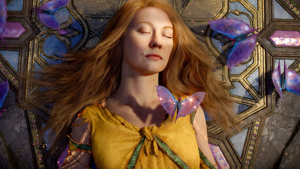
When Faye's body is burned on the funeral pyre at the opening of God of War (2018), she does not simply cease to exist. Instead, as Laufey the Just — the Golden Hand of the Jötnar and one of the most powerful divine warriors in the Nine Realms — she awakens in the Everywhen. GamesRadar summarizes it as "a cross-culture afterlife of the gods where deities collide." Official descriptions call it "a world filled with dangerous magic," one that is simultaneously vivid and corrupted.
The realm is both beautiful and threatening. Unlike Hel's desolation or Valhalla's heroic grandeur, the Everywhen is lush, colorful, and unexpected — while also being contested territory where gods from multiple mythological traditions battle for power. Faye arrives not as a conquering hero but as an outsider, quickly captured by Begtse (Tibetan-Buddhist war god) who dismissively calls her a "godling."
God of War Laufey Everywhen: Lore & Rules
Everything we know about how the God of War Laufey Everywhen works — with source confidence labels.
The Everywhen God of War Laufey: Afterlife of the Gods
CONFIRMEDMultiple official summaries and press coverage describe the Everywhen as "the afterlife of the gods" — the realm where all gods go when they die. Faye enters it immediately after her funeral pyre at the start of God of War 2018.
Cross-Cultural Collective Afterlife
CONFIRMEDThe Everywhen is not Norse-specific. It is a cross-cultural collective afterlife where gods from Egyptian, Tibetan-Buddhist, Norse, and other mythologies all coexist. GamesRadar describes it as "a cross-culture afterlife of the gods where deities collide."
"Where Gods Go When They Die"
REPORTEDLore breakdowns describe the Everywhen as specifically "where gods go when they die" — not mortals, not giants in most cases, but divine entities. This rule explains why Faye, despite being a Jötunn, ends up there: her godly power as the Golden Hand of the Jötnar qualifies her.
World of Dangerous Magic
REPORTEDOfficial descriptions call the Everywhen "a world filled with dangerous magic." It is not a peaceful afterlife — it is a contested realm where gods from multiple pantheons "battle for power," making it threatening and volatile.
Faye Pulled From Her Pantheon After Death
REPORTEDGamesRadar reports that "only in death was she able to be pulled from the pantheon in which she dwelt to somewhere else entirely." This framing suggests Faye's death is what transported her to the Everywhen rather than to a Norse afterlife like Hel or Valhalla.
Begtse Calls Faye a "Godling"
REPORTEDIn observed demo dialogue, Begtse refers to Faye as a "godling" — recognizing her as a lesser or emerging divinity within the Everywhen's hierarchy. This suggests there is a power structure among the gods of the Everywhen, with Faye starting at the bottom.
"The Gate Is Closed" — Boundaries Within the Realm
REPORTEDIn the demo, Begtse says "the gate is closed," implying the Everywhen has internal boundaries or thresholds that control movement through the realm. The nature and location of this gate have not been officially detailed.
Connection to Odin's Mask (Fan Theory)
UNVERIFIEDMany fans and theorists believe the mask Odin obsessed over in God of War Ragnarök is connected to the Everywhen — possibly a gateway between the realm of the living and this afterlife. This explains Odin's fixation better than any other theory. However, Santa Monica Studio has not confirmed this link.
God of War Laufey Everywhen: Gods & Pantheons
The God of War Laufey Everywhen is inhabited by gods from multiple world mythologies. Because it is the collective afterlife of all gods, any divine being killed in the series — or in real-world mythology — could theoretically be present.
| Pantheon | Status |
|---|---|
| Norse | Possible (unconfirmed) |
| Egyptian | Confirmed |
| Tibetan-Buddhist / Mongolian | Confirmed |
| Greek | Possible (unconfirmed) |
| Unknown / mixed | Reported (unconfirmed identity) |
The possibility of Greek gods appearing in the Everywhen is one of the most exciting unanswered questions. Gods like Zeus, Ares, Poseidon, Hades, and Athena — all killed by Kratos in the original trilogy — would qualify as inhabitants of the afterlife of the gods. Santa Monica Studio has not confirmed or denied their presence.
God of War Laufey Everywhen: Sekhmet & Begtse
The two primary antagonists of the God of War Laufey Everywhen are Sekhmet and Begtse — gods of war from two different mythological traditions who have established control over the realm and treat Faye as a threat to be caged.
Sekhmet
CONFIRMEDEgyptian mythology · War goddess, primary antagonist
In real-world Egyptian mythology, Sekhmet is the lion-headed goddess of war, destruction, and healing — one of Egypt's most powerful deities. In God of War Laufey, she is one of the two gods of war who capture Faye in the Everywhen. She is described as heavily armored and masked, with Faye's sword shattering against her armor.
Begtse
CONFIRMEDTibetan-Buddhist / Mongolian mythology · War god, afterlife bouncer
Begtse (also spelled Beg-tse) is a Tibetan-Buddhist war deity with Mongolian origins, traditionally depicted with three eyes and fierce armor. In God of War Laufey, he is paired with Sekhmet as a gatekeeper of the Everywhen. Lore breakdowns describe him as an "afterlife bouncer" and suggest he may be Faye's tutorial boss. He calls Faye a "godling."
For how Sekhmet and Begtse appear in the trailer, see the God of War Laufey trailer breakdown.
God of War Laufey Everywhen: The Odin Connection
One of the most compelling theories about the God of War Laufey Everywhen is its potential connection to the mask from God of War Ragnarök. In Ragnarök, Odin was obsessed with a mysterious mask — and the reason for that obsession was never fully explained. Fan theorists argue the mask is a gateway between the realm of the living and the Everywhen, which would explain both Odin's fixation and why Faye — whose body was burned and not laid to rest in a Norse-specific way — ends up in a cross-cultural divine afterlife rather than Hel or Valhalla.
Santa Monica Studio has not confirmed this connection. But it remains the most structurally satisfying theory for how Laufey ties to Ragnarök's unresolved threads. If true, it would mean Odin may have known about the Everywhen — and possibly feared it.
For full story context including how Faye's death sets up the game, see the God of War Laufey story guide.
God of War Laufey Everywhen FAQ
What is the Everywhen in God of War Laufey? ▾
The Everywhen is the afterlife of the gods — the realm where all gods and all divine magic go when they die. It is a cross-cultural collective afterlife, meaning gods from every mythology (Norse, Egyptian, Tibetan-Buddhist, Greek, and others) can be present. It is the primary setting of God of War Laufey.
Why does Faye wake up in the Everywhen? ▾
Faye awakens in the Everywhen because she is a divine-tier warrior — Laufey the Just, the Golden Hand of the Jötnar. After Kratos burns her body, she enters the afterlife of the gods rather than a mortal afterlife. Coverage describes her as being "pulled from the pantheon in which she dwelt to somewhere else entirely" at the moment of her death.
What gods are in the Everywhen? ▾
Confirmed antagonists are Sekhmet (Egyptian war goddess) and Begtse (Tibetan-Buddhist war god). The realm theoretically contains all dead gods from the full series — Norse, Greek, Egyptian, and beyond — though Santa Monica Studio has only officially named Sekhmet and Begtse so far.
Is the Everywhen connected to Odin's mask from Ragnarök? ▾
This is a popular fan theory — that Odin's mask was a gateway to the Everywhen, explaining his obsession. Santa Monica Studio has not confirmed this connection. It is currently unverified speculation, though it is the most widely cited theory among fans.
Who are Sekhmet and Begtse? ▾
Sekhmet is an Egyptian war goddess — the primary antagonist paired with Begtse, a Tibetan-Buddhist war god. Together they serve as gatekeepers and captors of Faye in the Everywhen. Begtse calls Faye a "godling" and may serve as an early tutorial boss. Both are confirmed as named characters from official reveal materials.
Can Greek gods like Zeus appear in the Everywhen? ▾
Theoretically yes — since the Everywhen is the collective afterlife of all gods, any god killed by Kratos in the original Greek trilogy (Zeus, Ares, Poseidon, Hades, Athena, Helios, etc.) could be present. Santa Monica Studio has not confirmed which dead gods will actually appear in the game.
Sources & References
- Official · Official Reveal Footage
- Official · PlayStation State of Play — Reveal Trailer
- Official · “Introducing Faye” Behind-the-Scenes
- Related · God of War Laufey Mythology Guide
- Reference · Begtse — Wikipedia (Tibetan-Buddhist war deity)
- Reference · Sekhmet — Wikipedia (Egyptian war goddess)
- Reference · God of War Wiki — Fandom